Sunday, October 26, 2014

We are enjoying nice fall weather.  The golf course has dried out and is playing firmer than it has in a while.  Growth in all turf areas is slowing down and is allowing us time to work on leaves and other small projects before the season ends.

 
There have been many days where carts have been restricted to the path this fall but we have finally dried out!
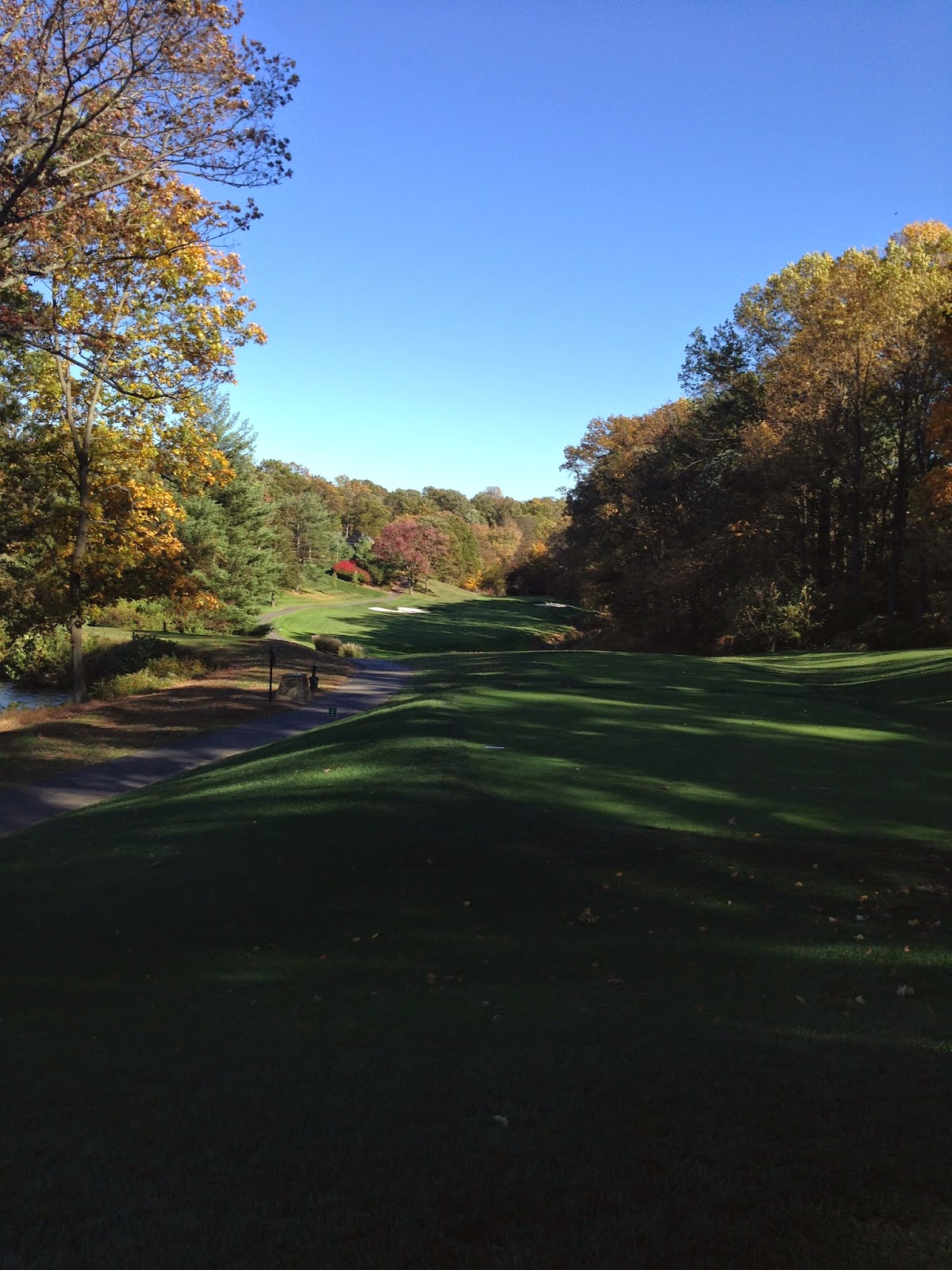
 
 
The fifth hole barely sees the sun this time of year and stays very wet.
 
 
There has been lots of positive comments on the condition of the greens. Here Julio double cuts the eighth green in preparation for closing breakfast on Friday.  We only mow greens three times a week but roll more often.
 
 
His second pass is in the opposite direction.  The greens are mowed at the same height throughout the season.  Green speed was measured on the practice green at 13 feet!
 
 
We are trying to create a small layer of mat in our fairways but have not had much success so far.  This is a plug from the third fairway where we did not do any earth work.  The soil profile is nice and uniform and has little thatch below the turf line.  A little thatch is beneficial but too much is problematic.
 
 
This plug is also from the third fairway but is from the area where earth work was performed.  Notice the mottled soil from the compost that was incorporated at construction as well as the small area of thatch just below the turf line.  Our thinking is that our old soils have plenty of soil microbes that are very efficient in breaking down organic matter (thatch) while the newly constructed area lacks beneficial microbes.  We are in search of a happy medium.
 
 
The driving range tee has performed admirably this season but is ready to be shut down.  Mats only coming soon till spring.
 
 
We will begin sodding several weak areas later this month.  This is the fifth hole and the light green turf in the rough is called Poa trivialis or roughstalk bluegrass and is undesirable.  The dark turf is fescue/blue sod that was sodded last fall.  Our hope is to have this type turf around all the fairways.
 
 
This is the first hole where we sodded a small section of fescue.  The lighter green turf to the left is annual bluegrass invading our newly seeded rough.  The sodded turf seems to choke out the annual bluegrass seed found in the soil.
 
 
We are beginning to see wooly bear caterpillars as they search for overwintering sites.  The caterpillar has a band of red in the center and the narrower the band the harsher the winter.  This critter doesn't have any red.  Here comes the winter from *^%*$#!!!

Wednesday, October 15, 2014

The rain has arrived.  After a dry September the course has received more than its share of late.    Fortunately drier weather is in the future.  Lets hope the course can dry out and give us a little roll and better playing conditions.

 
Four green Wednesday afternoon.
 
 
The practice green at nearly the same time.  New greens are built to drain.
 
 
The last Pylex application was harsh on the bent.  This lasted approximately one week.
 
Six approach with Pylex applied two weeks ago.  The yellow flashing is almost gone but the bermudagrass is white.  New bent seedlings are emerging.
 
 
We saw some unusual things in our treatments.  Crop circles?
 
 
This has been a year of highs and lows.  This picture illustrates two varieties of turf found in our fairways.  The blue pen is pointing at the bent while the pencil is aimed at Poa annua.  It is going to be a real challenge reducing the amount of Poa in the fairways and rough.
 
 
Here is a solid stand of bent filling in over some fading crabgrass is the fifth fairway.
 
 
As suspected Quincy tore his other ACL and had surgery on Tuesday.  Eight weeks of rehab before he will be running again.


Tuesday, October 7, 2014

The golf course continues to fill in but would benefit greatly from a soaking rain. We recently applied probably our last application of Pylex herbicide to approximately three acres of fairways contaminated with bermudagrass.  These areas are quite obvious now as the bent has a yellow flashing common with this herbicide.  This yellowing should mow out over the next week and is not harmful to the bent.  These areas were seeded the same day so the bent will transition into the bermudagrass areas as the bermudarass declines.  The true test will be how much bermudagrass is present next season.

 
Its not hard to tell where the Pylex was applied.  The yellowing of the bent is unsightly but temporary.  This application should really whiten the bermudagrass.
 
 
More yellowing.
 
 
Temporary pain for future benefits to our fairways.
 
 
The fairway areas with bermudagrass encroachment were seeded the same day(last Wednesday).
If you look close some seedlings are beginning to emerge in the slit.
 
 
We have added some additional irrigation to improve some rough areas on the course.  This is the new area behind the sixth green and the rough on five.
 
 
The old turf nursery at fifteen tee has been moved and the fescue has grown in beautifully.
 
Additional greens nursery planted with Crystal BlueLinks bent behind the fourteenth green.


Quincy is going to the vet on Wednesday to have his right leg checked out.


Sunday, September 28, 2014

Finally some beneficial rain this week.  The course received almost an inch and while it has made the course much too wet in the short term the benefits are already being seen.  The course is healing rapidly and we should see much more favorable results from our seeding.

 
Agricultural chemotherapy.  I heard this term twice in the same day and it is very true.  While eliminating the bermudagrass in the rough the chemical was also harsh on some of the desirable tall fescue.  These areas are being overseeded.

 
Pylex has worked very well in the fairways but the bermudagrass sticks out like a sore thumb right now.  We are observing bent beginning to fill in these areas even before we have seeded which is encouraging.
 
 
If you saw some irrigation on Saturday morning after all the rain you had to be wondering what in the world are we doing???  This is the rough around nine green where some very hungry white grubs were munching on our nice turf.  An insecticide was applied and immediately watered in. 


Our turf care center encountered some vandalism Friday night.  Fortunately only some paint graffiti to one of our tractors has been discovered so far.
 
 
The knucklehead was so smart he left a clue.  Leaving his cell phone was even more helpful!
 
 
Our greens are as a good as they have ever been!
 

Saturday, September 20, 2014

Our golf course has had a great year.  The weather has been magnificent and has surely aided the development of our new fairways.  Our greens have recovered amazingly fast from aeration and are back!  It is hard to remember when the greens have bounced back so fast.  We did have a minor set back this week.  One of our sprayers caused some damage to our bent fairways from an application the previous week.  We still are not sure exactly what happened but they are rapidly healing.  We are having to keep them wetter than we would like to enhance recovery.  Hopefully over the course of the next week we can begin laying off the irrigation.  We apologize for the disruption to the golf course but feel confident the fairways will be just fine.  We would appreciate some rain if anyone has a connection!  We are very dry and it is inhibiting seed from germinating in the rough.

 
Phytotoxicity from a fairway spray application.
 
 
Another look at some striping from the spray nozzles.
 
 
Pylex is really doing a number on the bermudagrass.  We will begin seeding some of these areas this week.
 
 
#12 green Saturday morning.
 
 
Complete recovery in 18 days with green height reduced to .130 inches.
 
 
The beautiful renovated 3rd hole.


Wednesday, September 17, 2014

The good and the bad.  Stress to the turf, the staff, and the membership.  Did we ever mention our love-hate relationship with course maintenance?  It is rewarding seeing things grow but sometimes the road getting there is pretty bumpy.  The one thing we do know is that aerification has been proven time and again to be the best form of preventive maintenance.  So we apologize for the mess we have made but feel confident it is in the courses best interest.   


This was taken on September 2nd.
 
 
Two weeks later what an improvement!
 
 
Greens were double cut today.  We will lower the height of cut next week and have them near warp speed in no time.
 
 
Here is a real concern.  These little insects are called annual bluegrass weevils and they pose a real problem for us in the future.  In this picture adults and larvae are shown.  They prefer annual bluegrass but will feed on bent.
 
 
This is the area where they were discovered.  They are so small they are difficult to see.  I used a salt water solution and soaked the turf plug in a bucket.  The insects then float to the surface.  Notice the annual bluegrass that has been damaged with the bent unaffected.  There will be much more on this insect in the future.
 
 
Pylex herbicide continues to be evaluated.  This picture shows treated versus untreated.  The treated area has been seeded. 
 
 
Rough not requiring seeding received Pylex with Turflon herbicide.  The Turflon prevents the intense whitish-yellow discoloration.  Treating the rough this way is are eventual goal.
 
 
Pylex applications certainly suppress the bermudagrass in our fairways but will it reduce the population?  We shall see.

 
This is one of the best times of the year to feed cool season turf.

 
Fertilized and seeded turf require plenty of water.  The course is very soft from all the water we are using.  We are dry and a nice soaking rain would be perfect.  It would even dry up the course!
 

Monday, September 8, 2014


Labor Day week was the most stressful period of the summer for our course.  Above normal temperatures along with stifling humidity made course renovation challenging.  Thankfully cooler weather is now with us and the course can rejuvenate itself.  We have plenty going on at this time so bear with us as we move into fall.

 
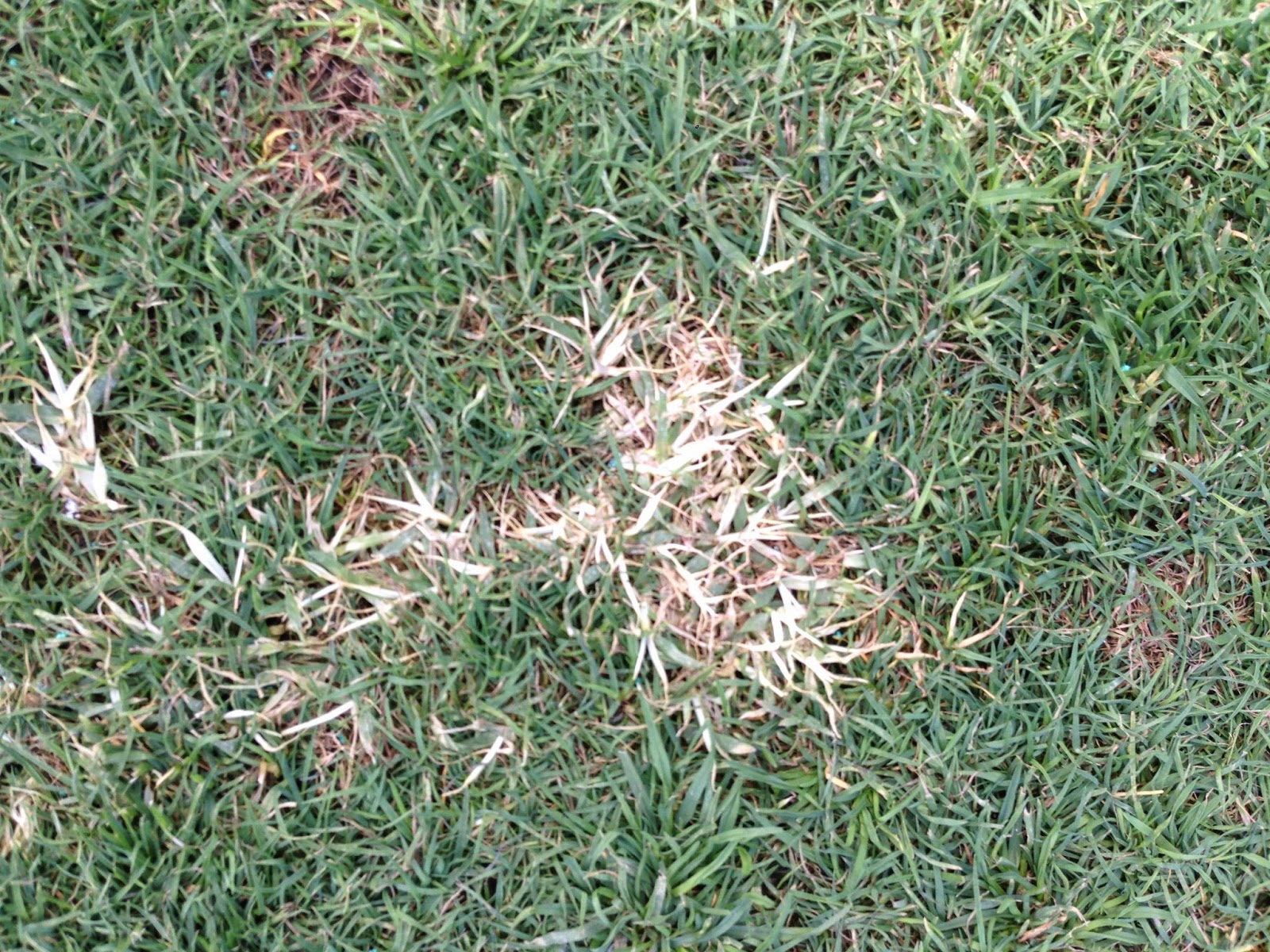
We have had two recent outbreaks of Rhizoctonia Blight in the fairways.  This disease is also called brown patch and favors hot and humid conditions.  Fairways are sprayed every two weeks but sometimes disease pressure requires more applications.  Our most recent fungicide application only lasted nine days before the disease reoccurred.

 
We have also seen some decline in annual bluegrass populations in some fairways.  This is not a bad thing as we continue to push for more bent in these weak areas.
 
 
With the juvenile bentgrass we decided not to use a preemergent herbicide to prevent crabgrass in the spring.  Here crabgrass invasion can be seen in one of the fairways.  This was expected and will be prevented next season. 
 
 
All of the fairways are receiving solid tine aeration.
 
 
When conditions are right this is how the fairway should look after aeration.
 
 
Specific greens were verticut and seeded after aerating and topdressing.  This is really the only time to successfully seed cool season grasses.
 
 
Seeding is done at perpendiculars to ensure better germination.
 
 
Seeding the green.
 
 
After the green has been seeded it is rolled regularly.  This requires the putting surface to be dry or sand is picked up by the roller-and then you have a big mess!  The greens may not be mowed until the turf has grown through the sand which requires patience.
 
 
Seeding of weak rough areas around fairways has begun.  Please avoid driving golf carts through any newly seeded turf.
 
 
Some new irrigation was added in front of the fifteenth tee as we prepare to move the nursery.  This will be seeded this week.